How to Read My Dna Story on Ancestry Dna
I took 9 different Dna tests and here's what I found
The thing about me is that I'm Jewish. It'southward non the but thing nigh me. I'm also 5 feet 11 inches alpine, a glasses wearer and into bicycling. But most people who know me probably wouldn't be surprised to acquire that about of my ancestors lived in shtetls in Eastern Europe.
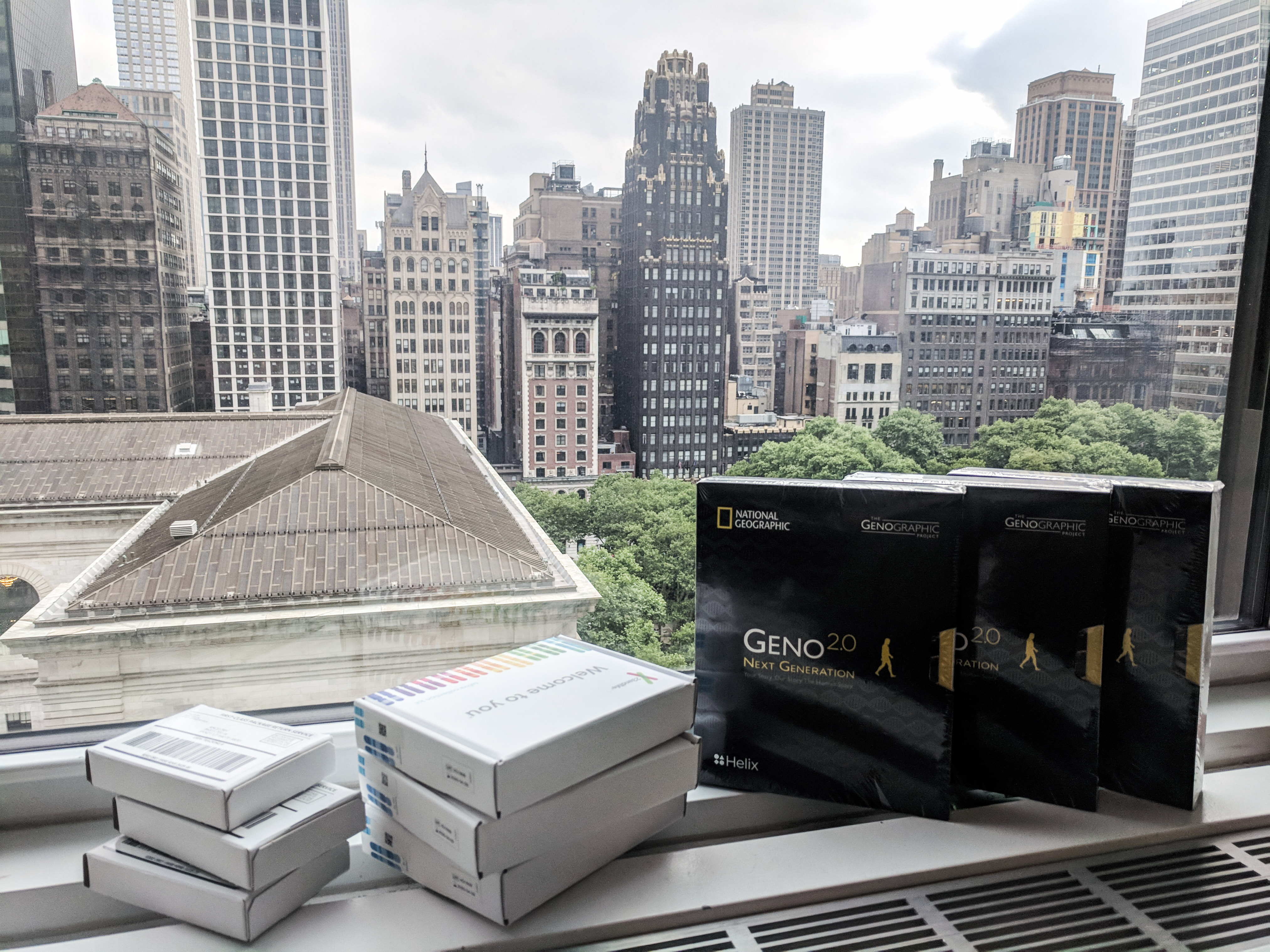
So, it wasn't too surprising when I sent off nine Dna samples to 3 dissimilar Dna companies under a diverseness of fake names, and the results indicated that I'm super-duper Ashkenazi Jewish. (Ashkenazim are Jews who trace their ancestry back to Yiddish-speaking populations inhabiting the region between France and Russia.)
Here's what was a fleck surprising, though: None of the companies — AncestryDNA, 23andMe and National Geographic, which works with a testing company called Helix — could concur on simply how Ashkenazi I am. [How Do Deoxyribonucleic acid Ancestry Tests Really Work?]
Iii companies, iii errors and six different results
AncestryDNA
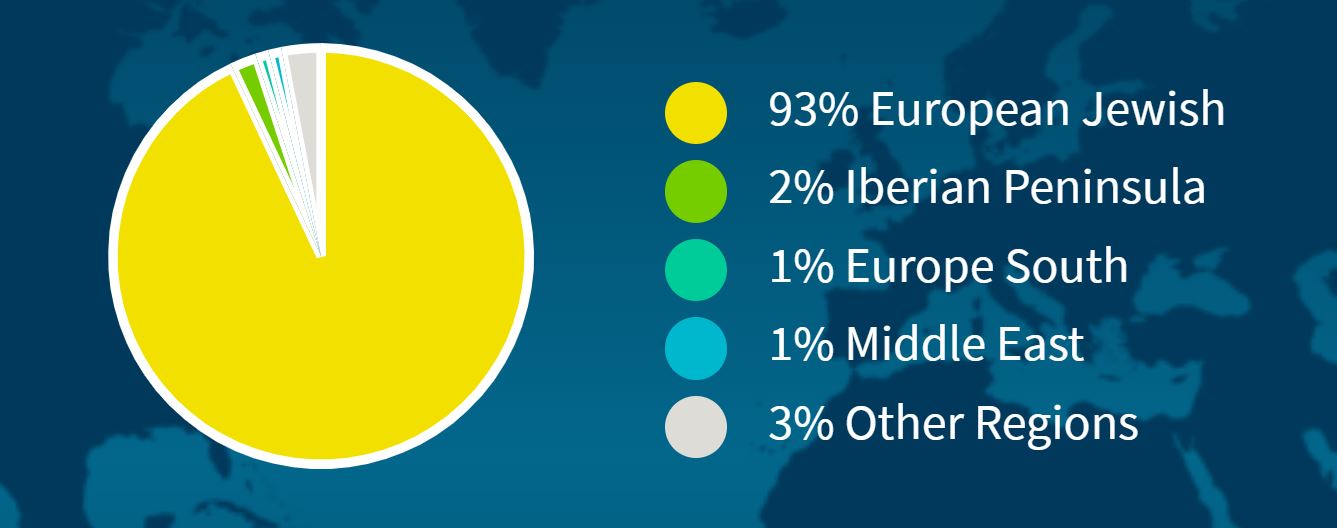
AncestryDNA looked at the first DNA sample that Alive Science sent in for me and reported back that I'm 93 percent "European Jewish." The remainder of my ancestry, it suggested, is equally follows: two percent traces back to the Iberian Peninsula (that's Spain and Portugal); 1 percent traces back to the "European South"; 1 percent traces back to the Middle Due east; and the residuum comes from elsewhere.
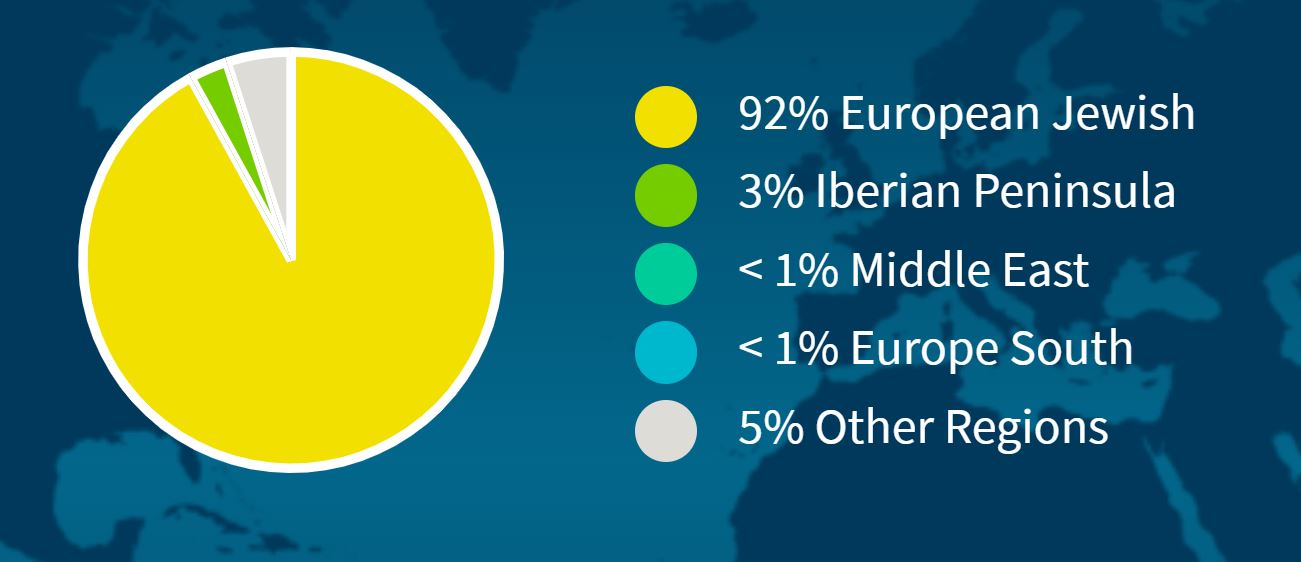
The second sample produced like — though, interestingly, non identical — results. This flake of Rafi-spit-in-a-tube, it reported, was simply 92 pct Ashkenazi, but a full 3 pct Iberian. The rest of the Deoxyribonucleic acid, co-ordinate to Beginnings, may take traced back to the Middle Eastward and European South or other regions. But each of those sources deemed for, at most, less than 1 percent of my Dna, co-ordinate to the site.
(Live Scientific discipline sent a third sample of my Dna to Beginnings under a third name, but an error prevents usa from accessing the results.)
23andMe
Like AncestryDNA, 23andMe concluded from the first DNA sample that my Ashkenaziness ranks somewhere in the low 90s, with a smidge of difference betwixt each of the samples it received. Unlike AncestryDNA, it had a not-entirely-Old World estimation of where my ancestors may accept come from — suggesting that perhaps a fraction of one percentage of my ancestors were Native American. (Given what I know of my family history, this is most certainly not true.)
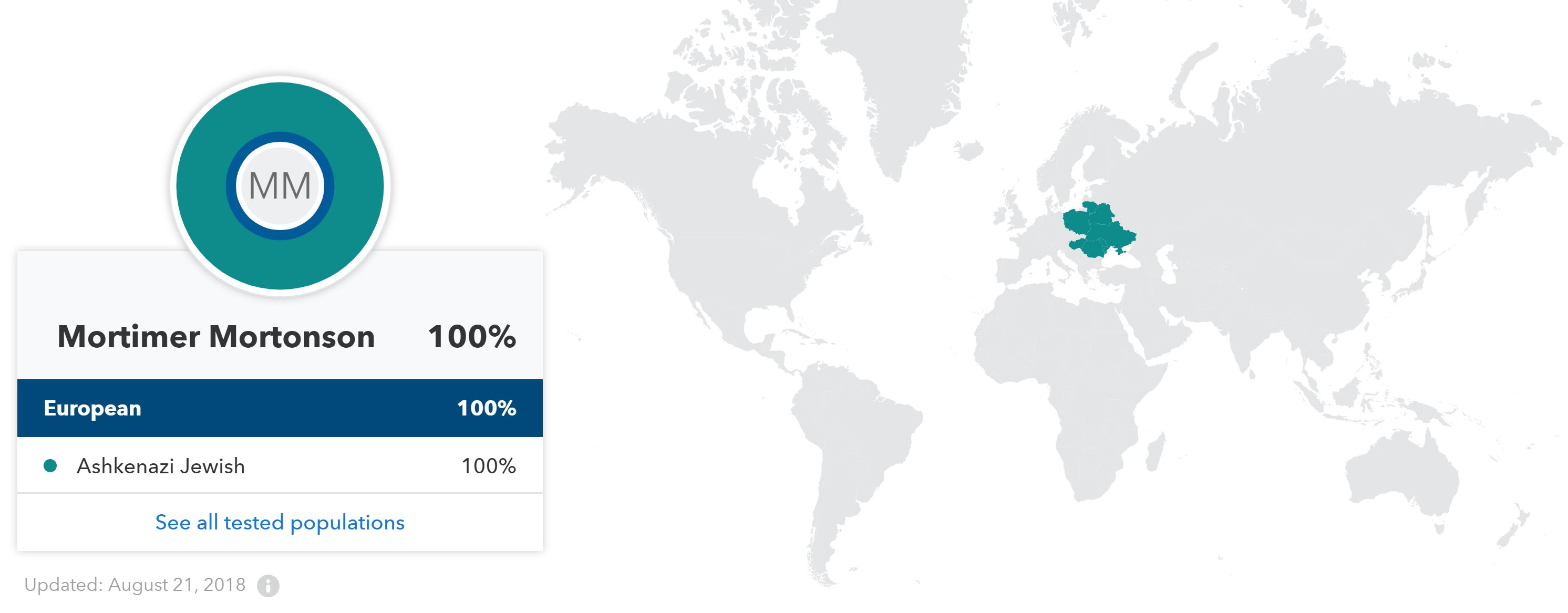
Notwithstanding, while I was reporting on this story, 23andMe updated its system for interpreting DNA samples and reassessed all the Dna already in its system. Now, when I log into 23andMe using the three different names I gave, the reports for two of those names say that I have 100 percent Ashkenazi ancestry. [The All-time DNA Testing Kits of 2018]
(A third sample sent to 23andMe has returned no results. Alive Science assigned a woman's proper name to i of the samples that it sent to each company and marked its sexual activity equally female. AncestryDNA processed its "female person" sample just fine, with no indication of annihilation unexpected, merely both 23andMe and Nat Geo required more personal information before proceeding, since it was from a person with unexpected chromosomes.)
Nat Geo and Helix
Finally, there's Nat Geo, which uses a service called Helix to exercise its Dna testing. Helix handles the raw DNA processing, while Nat Geo handles the interpretation.
Co-ordinate to Nat Geo, I'm manner less than 100 percent Ashkenazi. The genetic service reported that my offset sample's ancestry was 88 percent from the "Jewish Diaspora" (in this context, a term that more or less refers to Ashkenazim) and 10 percent from "Italy and Southern Europe."
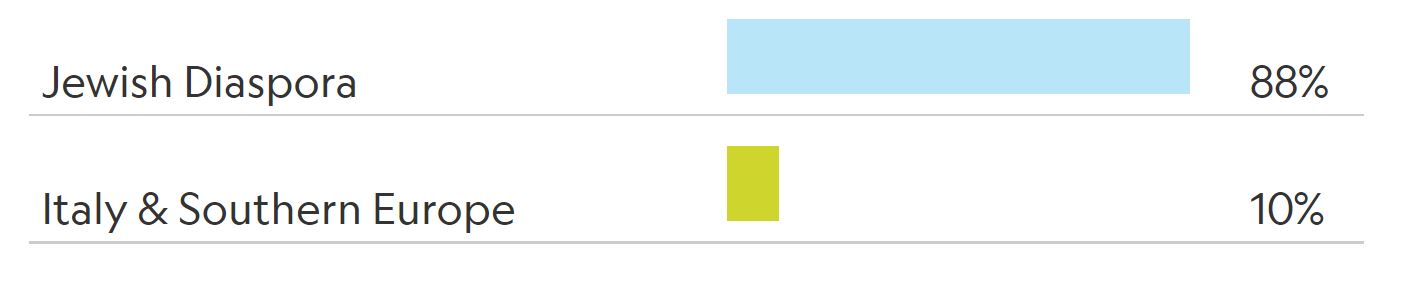
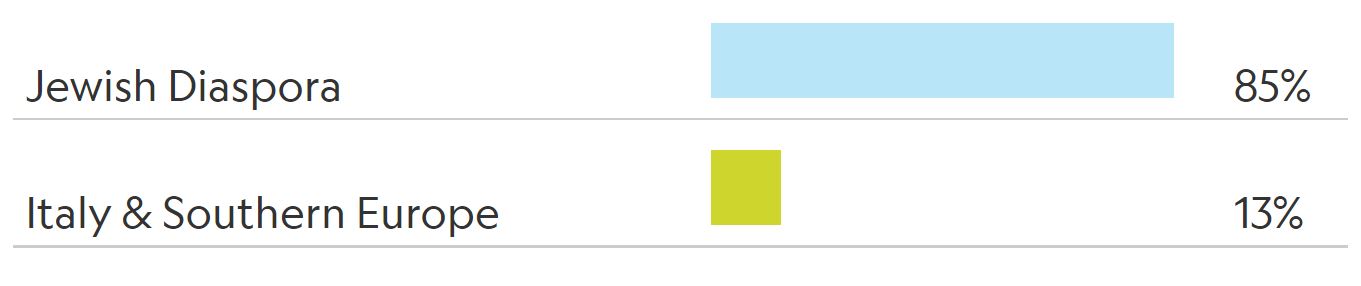
Nat Geo as well reported the biggest divergence between its 2 successful samples, reporting that the second sample it received was iii percent less "Jewish Diaspora" than the get-go — only 85 percentage. The remainder, this time, was 13 percent "Italy and Southern Europe."
So, 9 Dna tests later, I learned this nigh myself: I'm a whole lot Ashkenazi Jewish. Like, generally. Or entirely. The rest of my ancestors in recent retentiveness probably as well lived in Europe — though who actually knows where. And maybe somewhere in my family unit tree there was a Middle Easterner, or a Native American. Simply probably (almost definitely) not.
Only, of course, I already knew all that.
The Science
Scientists who specialize in this sort of enquiry told Live Science that none of this is all that surprising, though they noted that the fact that the companies couldn't even produce consequent results from samples taken from the same person was a bit weird.
"Ancestry itself is a funny matter, in that humans have never been these singled-out groups of people," said Alexander Platt, an expert in population genetics at Temple University in Philadelphia. "And so, you lot tin can't really say that somebody is 92.6 per centum descended from this grouping of people when that's non really a matter."
Log onto a website similar Nat Geo'south and it chunks the world up into different pieces. Some of your ancestors came from this spot, it says, and they were Fundamental Asian. Others came from that spot over there, and they were Middle Eastern. But that's non what human being history looks like. Populations fuzz together. People motility around, become together and dissever. A person who calls herself an Italian today might have chosen herself a Gaul a couple thousand years ago and gone to war against the Romans.
To separate people into groups, Platt told Live Scientific discipline, researchers brand decisions: For case, they'll say, the members of this grouping of people have all lived in Morocco for at least several generations, and so we'll add their DNA to the reference libraries for Moroccans. And people who had i grandparent with that sort of DNA will hear that they're 25 percent Moroccan. But that boundary, Platt said, is fundamentally "imaginary."
"There is construction to history," he said. "Certain peoples are more than closely related to each other than to other peoples. And [commercial Dna companies] are trying to create boundaries within those clusters. But those boundaries never really existed, and they aren't existent things."
In some places this is easier. Non-Jewish European populations, he said, tended not to mix quite equally much with others as people elsewhere in the world, so companies can easily draw finer distinctions between them.
But ultimately, it doesn't mean anything to exist 35 percent Irish, or 76 per centum Finnish. So, when 23andMe changed its mind nigh my ancestry, the 100 percentage answer wasn't more true. It was just another way of interpreting the data.
(In this example, Platt said, the visitor probably decided that since only about all Ashkenazi Jews take some genes in common with a mix of other European populations, information technology makes sense to phone call those genes Ashkenazi equally well.)
"It'south not really science so much as it's description," he said. "In that location isn't really a right or incorrect answer here, because there is no official designation of what information technology means to be Ashkenazi Jewish genetically."
Information technology'south not really weird to him that there'southward a xv percentage Jewishness gap between my results in Nat Geo and in 23andMe, he said.
Mark Stoneking, a population geneticist and group leader at the Max Planck Institute for Evoluntionary Anthropology in Leipzig, Deutschland, agreed.
"If they were to exist completely honest, what they should tell you is not that you're 47 percent Italian but that yous're 47 plus or minus some error range … based on their ability to distinguish this ancestry and other sources of error that get into the estimation," Stoneking told Live Science.
And it's clear that there are sources of error, he said. Neither Stoneking nor Platt was sure exactly why AncestryDNA had a 1 percent difference between its results for different samples, or Nat Geo had a 3 percent difference, or 23andMe had wiggle room that disappeared with the update. Just they agreed that it likely has something to exercise with their methods for converting a vial of spit into information for the computer to translate. (Alive Science asked all three companies to explicate the effect, but none gave a specific answer.) [Genetics: The Written report of Heredity]
Each of these companies, Stoneking said, breaks downward the DNA in the spit sample into alleles — genetic markers that they utilise as raw information. Simply that process is imperfect and clearly doesn't work the same manner every fourth dimension the companies run the rests, he said — though the errors aren't hugely significant.
Should you lot get your DNA tested?
None of this means an ancestry kit from 23andMe or AncestryDNA or Nat Geo is worthless, Stoneking and Platt agreed.
"I view these things as more for entertainment than anything else," Stoneking said.
The real science of population genetics, he explained, is used to figure out how big groups of people moved and mixed over fourth dimension. And it's good for that purpose. But figuring out whether iii to 13 percentage of my ancestors came from the Iberian Peninsula or Italy isn't part of that projection.
Platt said that he had gotten himself commercially tested, and that while he hadn't institute anything surprising, it'due south ever possible for someone to larn something new and interesting — particularly if they're of non-Jewish European ancestry and vague on the details. A white non-Jew might acquire something specific and interesting about their background, because their ancestors likely come from highly isolated reference populations on which the companies accept lots of data. But folks from other places have lower odds, merely considering the data from other places is more than express, fuzzy, and hard to interpret.
When I contacted the companies and asked them to comment on this story and to accost the question of why my results may accept differed — even when the test was performed by the same company — both Ancestry and 23andMe responded.
Here'southward what Beginnings said:
"We're confident in the science and the results that we give to customers. The consumer genomics manufacture is in its early stages but is growing fast and we tell customers throughout the experience that their results are as accurate as possible for where the science is today, and that information technology may evolve over time every bit the resolution of Deoxyribonucleic acid estimates improve[s]. We will always work to harness evolutions in science to enhance our customers' feel. For example, recent developments in DNA science allowed us to develop a new algorithm that determines customers' ethnic breakdown with a college caste of precision."
And here'due south the comment from 23andMe, which the representative requested Alive Science attribute to Robin Smith, a Ph.D. who holds the championship of group project manager at the company:
"Our ancestry reports are a living analysis and are ever-evolving, and as our database grows nosotros volition be able to provide customers with more granular information almost their ancestry and ethnicity. We are constantly making improvements to both our reference datasets, and the overall pipeline we utilise to compute customers' Ancestry Composition reports. In fact, we recently rolled out a comprehensive ancestry update before in the year, increasing the countries and regions nosotros report on — in order to provide more in-depth information to populations that are underrepresented in the study of genetics.
"In regards to the Ashkenazi reference populations, our precision for calling AJ [Ashkenazi Jewish] beginnings, has indeed improved from 97 percent to 99 percent over the past two years for these reasons. Our call up, meaning of all the Ashkenazi Jewish ancestry in the dataset, how much do we telephone call AJ has improved to 97 percent, up from 93 percent ii years ago.
"There may be inconsistencies across Dna ancestry tests due to differing algorithms and reference panels that differ in fundamental respects."
Nat Geo did not reply to multiple requests for annotate past press time.
Originally published on Live Science.
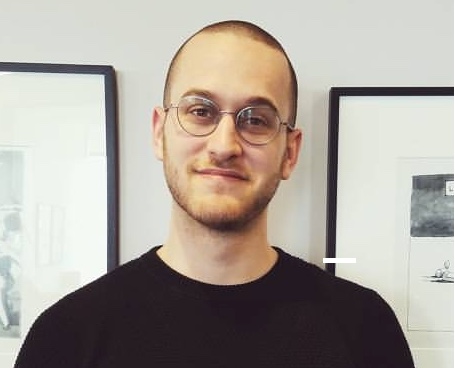
Rafi joined Live Science in 2017. He has a bachelor's caste in journalism from Northwestern University'south Medill Schoolhouse of journalism. Y'all tin can find his past science reporting at Inverse, Business Insider and Popular Science, and his by photojournalism on the Flash90 wire service and in the pages of The Courier Post of southern New Jersey.
Source: https://www.livescience.com/63997-dna-ancestry-test-results-explained.html

إرسال تعليق for "How to Read My Dna Story on Ancestry Dna"